

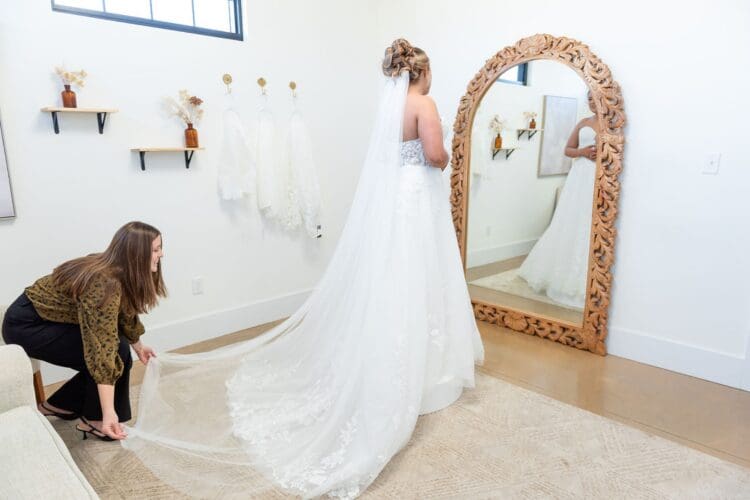
Once you find your wedding dress, the next important step begins. Bridal alterations transform the gown so it fits exactly as it should.
Designers create bridal gowns using standard sizing. Even when you order a dress close to your size, small adjustments are almost always needed. Alterations refine the fit, improve comfort, and ensure the gown moves beautifully when you walk or dance.
Many brides underestimate how much time alterations require. Understanding the wedding dress alterations timeline helps you plan fittings with confidence and avoid unnecessary stress.
Why the Wedding Dress Alterations Timeline Matters
Your wedding dress is unlike everyday clothing. It often contains multiple layers, structured bodices, delicate lace, and detailed construction. These elements require specialized tailoring techniques.
Following a clear timeline ensures your seamstress has enough time to adjust the gown properly.
Alterations often include:
- Adjusting the hem length
- Taking in or letting out the bodice
- Reshaping straps or sleeves
- Adding a bustle for the train
- Adjusting lace placement or appliqués
Each of these adjustments requires time and precision. Rushing alterations can lead to unnecessary stress during the final weeks before your wedding.
A thoughtful timeline keeps everything organized and allows each fitting to build on the previous one.
The Standard Wedding Dress Alterations Timeline
Most brides follow a three-appointment process. These fittings typically begin about two to three months before the wedding.
Here is the general wedding dress alterations timeline most seamstresses recommend.
First Fitting: 8 to 10 Weeks Before the Wedding
The first fitting marks the beginning of your alterations process. By this time, your dress should have arrived from the designer or boutique.
During the first appointment, your seamstress evaluates the gown’s overall fit. This fitting focuses on the major adjustments.
Your seamstress may:
- Pin the bodice to refine the shape
- Measure hem length with your wedding shoes
- Adjust straps or sleeves
- Identify areas that require tailoring
You will likely stand on a platform while the seamstress pins the gown. This helps determine the correct hem length and proportions.
Bring the items you plan to wear on your wedding day. These typically include your shoes and undergarments. Accurate measurements depend on these details.
The first fitting usually takes about an hour.
Second Fitting: 4 to 6 Weeks Before the Wedding
The second fitting allows you to see the initial alterations completed.
At this appointment, your seamstress checks how the dress fits after the first round of adjustments.
You will walk, sit, and move to test the fit of the gown. Your seamstress may still make a few small adjustments.
Common adjustments at the second fitting include:
- Fine-tuning the bodice
- Adjusting sleeves or straps
- Refining lace placement
- Confirming hem length
Your seamstress may also begin working on the bustle during this appointment.
The goal of this fitting is to ensure the gown feels balanced and comfortable.
Final Fitting: 1 to 2 Weeks Before the Wedding
The final appointment completes the wedding dress alterations timeline.
At this fitting, the gown should fit almost perfectly. Your seamstress will confirm the final adjustments and show you how to manage the bustle.
You should practice walking and sitting in the gown. This helps you feel confident moving in the dress.
Many brides bring a trusted friend or family member to this appointment. That person can learn how to secure the bustle on the wedding day.
The final fitting is also the moment when you take your gown home.
What Happens During Wedding Dress Alterations
If you have never gone through bridal alterations before, the process may feel unfamiliar. Understanding what happens at each appointment can help you feel prepared.
The seamstress will begin by evaluating how the gown sits on your body. Bridal gowns often include structured bodices and multiple layers of fabric.
These details require careful tailoring.
During the alterations process, the seamstress focuses on three main goals:
- Creating a balanced silhouette
- Ensuring comfortable movement
- Maintaining the design of the gown
For example, if lace patterns run along the bodice, the seamstress may need to reposition them after adjusting the fit.
This attention to detail is what transforms a beautiful dress into a perfectly fitted gown.
How Long Do Wedding Dress Alterations Take?
The full wedding dress alterations timeline usually spans six to eight weeks.
However, the exact timeline depends on several factors.
These may include:
- Complexity of the gown design
- Number of alterations required
- Availability of your seamstress
- Time of year during wedding season
Spring and fall are popular wedding seasons. Seamstresses often book appointments months in advance during these periods.
Scheduling early ensures you secure a convenient fitting schedule.
What to Bring to Your Alterations Appointments
Preparation plays an important role in successful alterations. Bringing the right items ensures accurate adjustments.
You should bring:
- Your wedding shoes
- Undergarments you plan to wear on your wedding day
- Accessories that affect the neckline
- Hair accessories if they affect the overall look
Your shoes are especially important. Hem length depends on heel height.
If you plan to change shoes during the reception, discuss this with your seamstress.
How Much Do Wedding Dress Alterations Cost?
Alteration costs vary depending on the work required.
Most brides spend between $300 and $800 on alterations. Simple adjustments cost less, while complex changes may increase the price.
Factors that influence cost include:
- Multiple layers of fabric
- Detailed lace or beadwork
- Major size adjustments
- Structural changes to the gown
It is helpful to budget for alterations early in your planning process.
Tips for a Smooth Wedding Dress Alterations Timeline
A few simple habits can make the alterations process smoother.
Communicate Clearly
Tell your seamstress how the gown should feel. If something feels tight or uncomfortable, mention it during the fitting.
Your feedback helps the seamstress adjust the gown properly.
Practice Moving in the Dress
Walk, sit, and turn while wearing the gown during fittings. These movements reveal areas that may require adjustments.
Comfort matters as much as appearance.
Schedule Appointments Early
Seamstresses often book quickly during wedding season. Scheduling early helps you follow the recommended wedding dress alterations timeline.
Common Questions About Wedding Dress Alterations
Brides often have similar concerns about the alterations process.
Can a Seamstress Alter a Wedding Dress More Than One Size?
Yes, a skilled seamstress can alter most gowns within one or two sizes. Larger adjustments may require more extensive tailoring.
Your seamstress can evaluate the dress and recommend the best approach.
What Happens if My Dress Arrives Late?
If your gown arrives close to the wedding date, speak with your seamstress immediately.
Some seamstresses offer rush alterations, though availability may vary.
Finding Your Wedding Dress at Leora Bridal
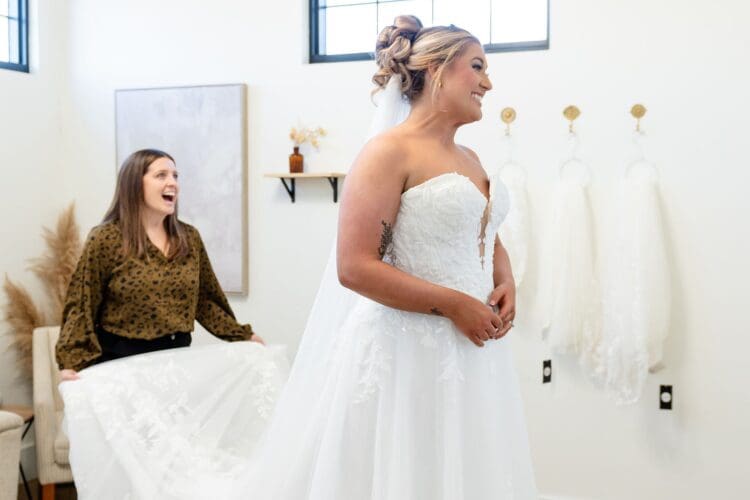
If you are looking for a bridal boutique that offers thoughtful guidance, Leora Bridal provides a welcoming and supportive experience. Our private suites create a relaxed space where you can explore curated designer gowns.
Book your appointment at Leora Bridal and take the next step toward finding the wedding dress that feels right for your day.


LEAVE A COMMENT
Comments