

You can love a wedding dress and still want to feel good about what you spend on it. The challenge starts when you realize the gown is only one part of your bridal look, and the details around it can change the final number quickly. Setting a realistic wedding dress budget before you start shopping gives you a clear starting point and helps you focus on gowns that fit both your vision and your finances.
A thoughtful budget does not mean limiting yourself to the least expensive dress you can find. It means knowing what you can comfortably spend, understanding which costs belong in that number, and giving yourself enough room to make decisions without second-guessing every appointment.
Start With Your Overall Wedding Budget
Before choosing a number for your dress, look at your entire wedding budget. Your gown should fit comfortably within the amount you have available for all of your wedding expenses.
Start with the wedding expenses you already have a good idea of, such as your venue, catering, photography, entertainment, and wedding rings. Once you have a clearer picture of those costs, you can see how much flexibility you have for your bridal attire.
Look Beyond the Price of the Gown
One of the easiest ways to underestimate your spending is to think only about the price of the gown. Your finished bridal look usually involves several additional expenses.
Before your first appointment, make sure you account for the other costs that may be part of your overall bridal budget:
- Alterations
- Veil or other headpiece
- Shoes
- Jewelry
- Bridal undergarments
- Preservation after the wedding
- Sales tax and other applicable fees
You do not necessarily need to purchase everything at the same time. However, knowing which pieces you want will help you avoid using your entire budget on the gown and leaving too little for the rest of your look.
Leave Room for Alterations
Alterations deserve special attention because your gown may need several adjustments before it fits exactly the way you want. A seamstress may need to shorten the hem, adjust the bust, refine the waist, or make other changes based on your proportions and the construction of the dress.
The amount you spend can vary depending on the gown and the alterations required. A heavily embellished gown or a dress with intricate construction may require more specialized work.
Ask about estimated alteration costs before you commit to a gown. Keeping that expense separate from the dress price can make your overall planning much easier.
Set a Comfortable Spending Range
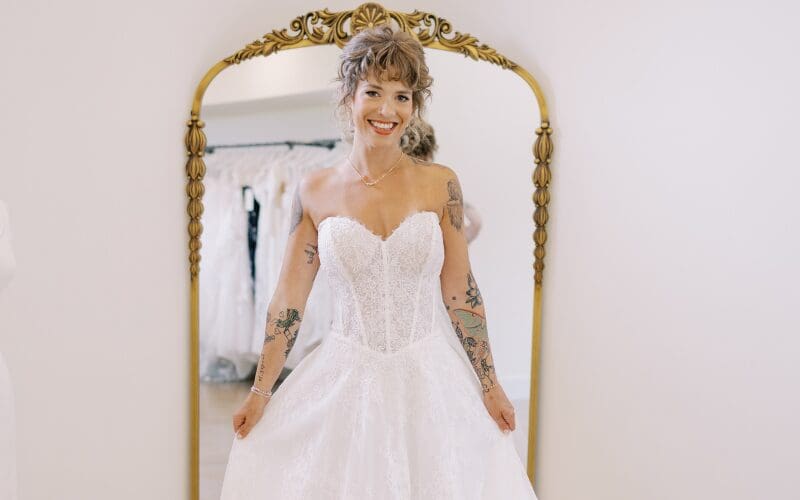
A single hard number can make dress shopping unnecessarily stressful. Instead, choose a comfortable range with a firm maximum that you do not want to exceed.
For example, you might decide that you want to shop for gowns around $1,500 to $2,000, with $2,200 as your absolute limit. This gives you room to compare different styles without treating every gown above your ideal price as automatically off-limits.
Your maximum should reflect what you can actually afford, not what you could technically put on a credit card. If a purchase would create financial stress after the wedding, the gown is not truly within your budget.
It also helps to tell your bridal stylist your preferred range before you begin trying on gowns. A good stylist can use that information to guide you toward options that make sense financially while still matching your style.
Know What Can Push the Price Higher
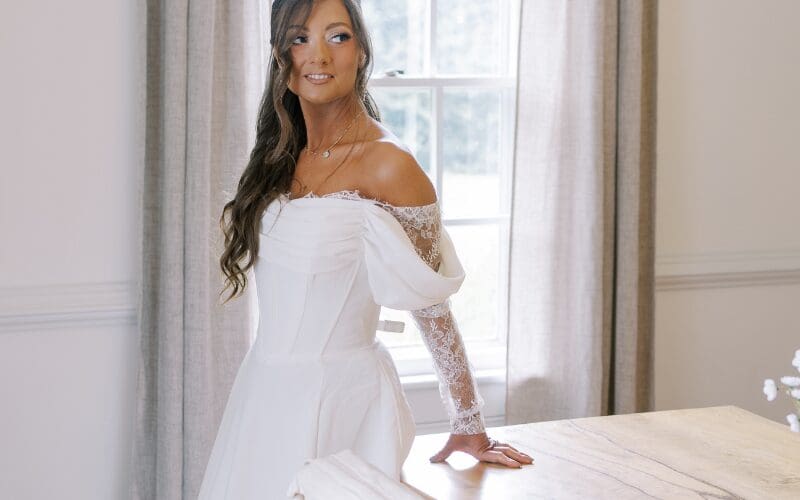
Two gowns can have a similar silhouette and feel completely different in price. Fabric, construction, designer, embellishment, lace, beading, and other design details can all affect the cost.
If you have a particular look in mind, identify the details that matter most to you. You may care deeply about an intricate lace train but feel less attached to extensive beading on the bodice. Knowing your priorities gives your stylist more ways to find a gown that delivers the look you want without unnecessary extras.
Designer collections can also have different pricing, even when the gowns share similar silhouettes. Ask questions about the gown’s construction and design details rather than judging the value by appearance alone.
Shop With Your Maximum in Mind
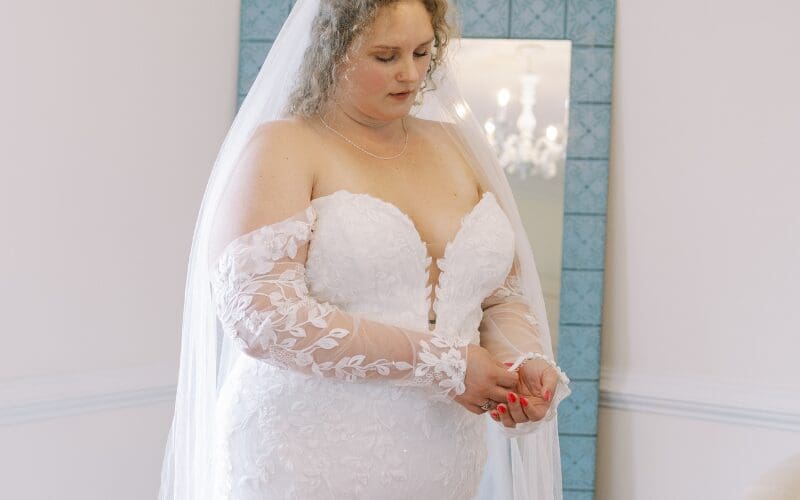
Trying on gowns outside your price range can make it harder to feel satisfied with the options you can comfortably afford. You may fall in love with a dress that creates pressure to increase your budget before you have considered the full cost of your bridal look.
That does not mean you need to avoid every gown that sits slightly above your preferred range. Instead, know your absolute limit before you begin shopping and communicate it clearly.
Your stylist can then help you explore gowns within that range. You can focus on how each dress fits, moves, and makes you feel instead of constantly calculating whether you can justify the price.
Avoid Common Budget Mistakes
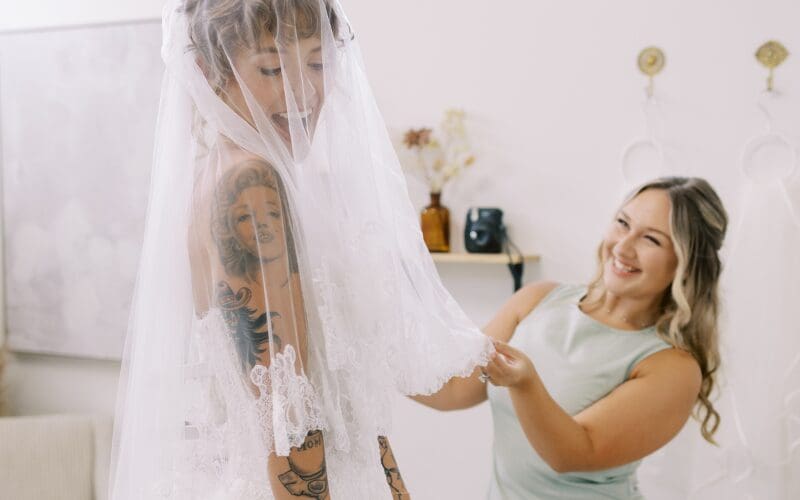
Even a carefully planned budget can get off track when you start shopping. A few common mistakes can make the process more expensive than you intended.
Forgetting the extras: A gown may fit your budget while the veil, accessories, alterations, and shoes push your total much higher.
Setting a number without researching prices: Your ideal budget should reflect the type of gown you want and the bridal market you are shopping in.
Letting one dress change your entire plan: It is easy to convince yourself that spending a little more will not matter. Several small increases can create a much larger difference in the final cost.
Ignoring the cost of alterations: The gown price alone does not always tell you what you will spend to achieve the final fit.
Shopping without communicating your budget: Your stylist cannot guide you effectively if they do not know your price range.
Give Yourself Permission to Enjoy the Process
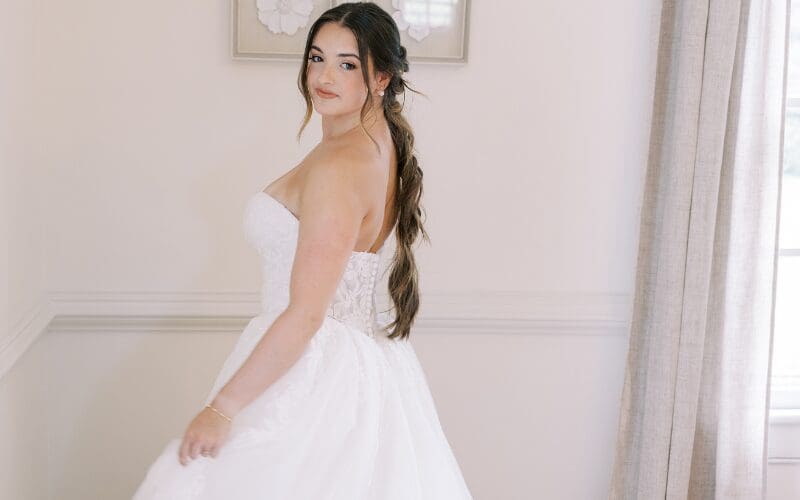
A budget should give you confidence, not take the excitement out of wedding dress shopping. Once you know your budget, you can spend your appointment thinking about the details that actually matter to you.
Pay attention to how the gown fits your body and whether the silhouette feels right. Notice how the fabric moves and how the neckline frames you. Think about whether you feel confident when you see yourself in the mirror.
You do not need the most expensive gown in the boutique to find the one that feels right. A thoughtful budget gives you the freedom to make that decision based on what you love rather than what you can stretch yourself to afford.
Find Your Dress With Confidence
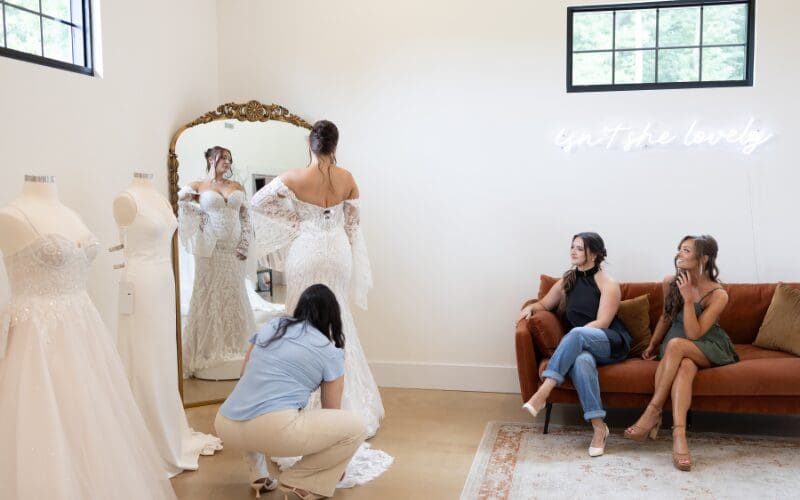
Your wedding gown should feel exciting from the moment you find it through the day you walk down the aisle. Having a clear budget before you shop makes it easier to enjoy the experience without worrying about whether you are making a financially responsible choice.
At Leora Bridal, you can share your style, priorities, and budget with a bridal stylist who can help you explore gowns that make sense for your vision. When you are ready to start your search, book your bridal appointment and discover a gown that feels beautiful, personal, and right for you.


LEAVE A COMMENT
Comments